
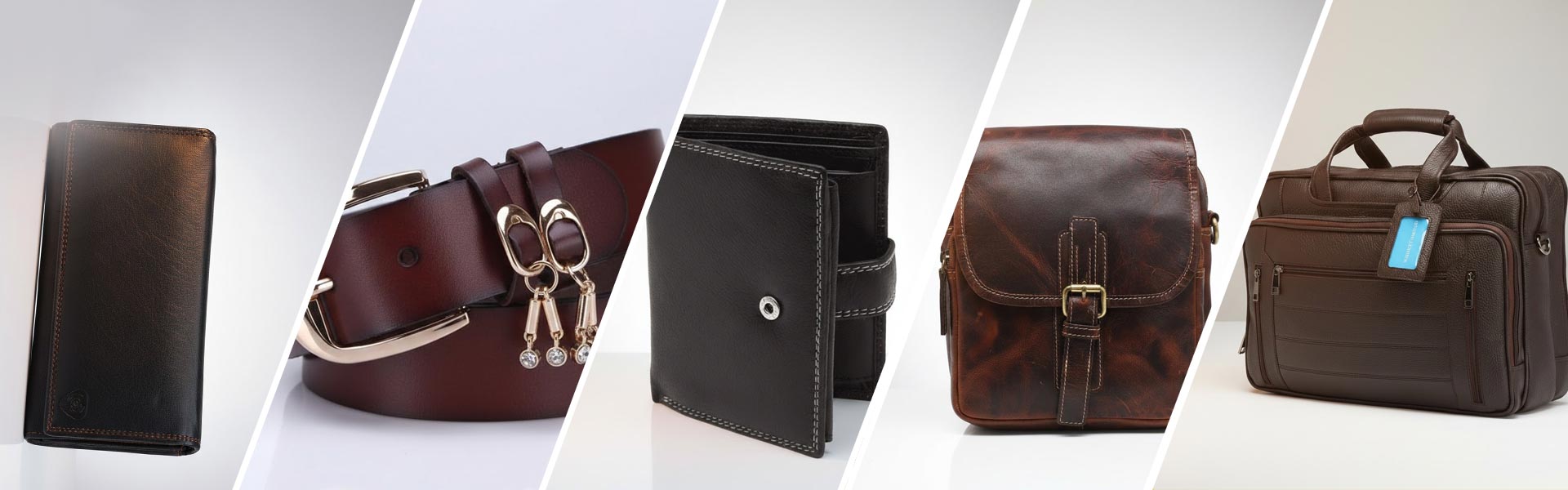
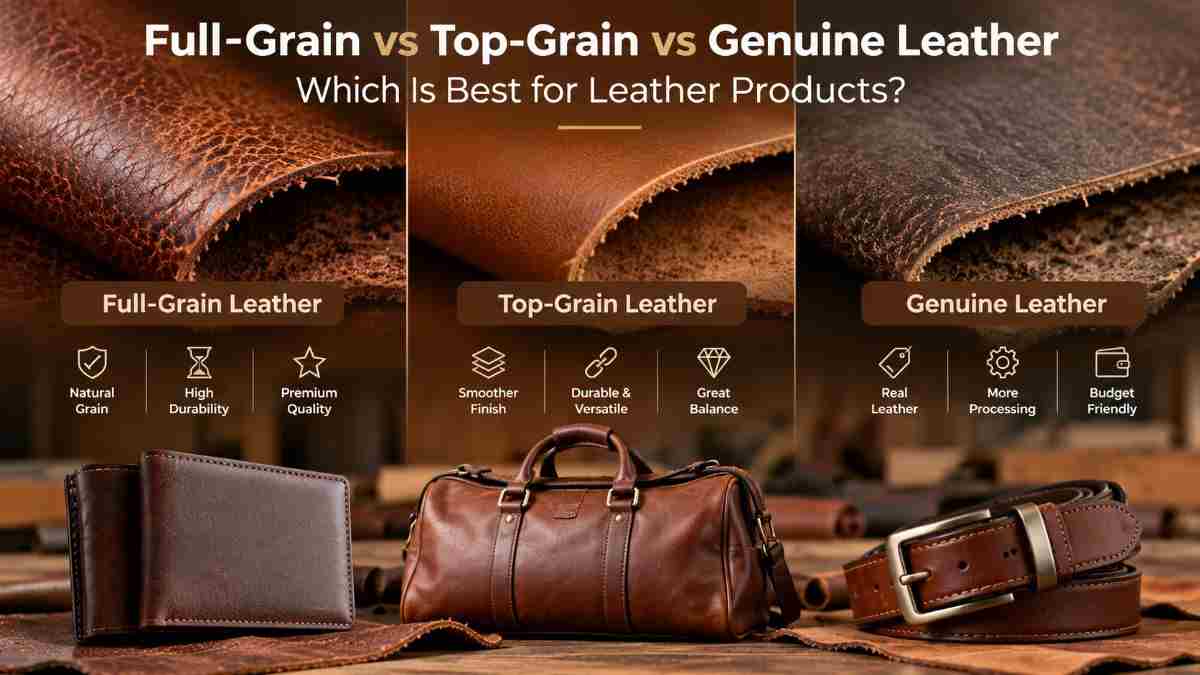
When buying or sourcing leather products, terms such as full-grain leather, top-grain leather, and genuine leather are often used to describe material quality. These terms can sound similar, but they refer to different levels of processing, appearance, durability, and price.
For retailers, wholesalers, and private-label brands, understanding these differences is important because the leather grade directly affects how a product feels, ages, performs, and is positioned in the market.
Naz Leather Export manufactures a wide range of leather goods, including wallets, bags, belts, and leather accessories, making leather selection an important part of product sourcing and customization.
What Is Full-Grain Leather?
Full-grain leather is made from the outermost layer of the hide and retains the natural grain surface.
Because the surface is not heavily sanded or corrected, natural characteristics such as pores, grain patterns, and minor marks may remain visible.
Full-grain leather is often valued for:
- Natural appearance
- High durability
- Strong fiber structure
- Ability to develop patina
- Premium feel
It is commonly used in high-quality wallets, belts, bags, and other leather products designed for long-term use.
What Is Top-Grain Leather?
Top-grain leather is also made from the upper portion of the hide, but its surface is usually sanded, buffed, or corrected to create a more uniform appearance.
This processing can remove visible imperfections and make the leather easier to finish consistently.
Top-grain leather is often chosen because it offers a balance between premium appearance, durability, and consistency.
What Is Genuine Leather?
Genuine leather is real leather, but the term does not automatically mean that it is the highest grade.
It may refer to leather made from lower layers of the hide after the top grain has been separated.
Depending on processing and finishing, genuine leather can still be suitable for many products, but it may not offer the same natural grain, strength, or aging characteristics as full-grain or top-grain leather.
What Is the Main Difference Between Full-Grain, Top-Grain, and Genuine Leather?
The main difference lies in how much of the natural hide surface remains and how heavily the leather has been processed.
- Full-grain leather: Retains the natural outer grain and undergoes minimal surface correction
- Top-grain leather: Uses the upper hide layer but is usually corrected or sanded for a smoother finish
- Genuine leather: Real leather that may come from lower hide layers and generally undergoes more processing
These differences influence durability, appearance, texture, pricing, and the type of customer the finished product is intended for.
Which Leather Is the Most Durable?
Full-grain leather is generally considered the most durable because the strongest natural fibers of the hide remain largely intact.
Instead of wearing out quickly, good-quality full-grain leather often develops character and patina over time.
Top-grain leather can also offer excellent durability, especially when properly processed and maintained.
Genuine leather durability varies more widely depending on the raw material, construction, and finishing process.
Which Leather Develops the Best Patina?
Full-grain leather is especially known for developing patina.
Patina refers to the natural change in color, texture, and surface character that develops as leather is handled and used over time.
This aging process is often considered desirable in premium leather products because it gives each item a more individual appearance.
Top-grain leather may also develop some patina, although surface treatments can influence how noticeable the effect becomes.
Which Leather Is Best for Wallets?
The best leather for wallets depends on the target market and price range.
Full-grain leather is often suitable for premium wallets because it combines durability, natural character, and long-term aging.
Top-grain leather can be a strong choice when retailers want a smoother and more consistent finish.
For modern wallet collections, buyers may also consider features such as RFID protection alongside leather grade. Naz Leather Export offers RFID leather wallets for buyers looking for leather wallets with additional card-protection features.
Which Leather Is Better for Leather Bags?
Leather bags need a material that can withstand repeated handling, weight, movement, and everyday use.
Full-grain leather can work well for premium travel bags, business bags, backpacks, and handbags designed for long-term use.
Top-grain leather can provide a refined and more uniform appearance, making it suitable for fashion-oriented or polished business products.
The final choice should also consider:
- Bag size
- Required flexibility
- Leather thickness
- Weight of the finished product
- Target price
- Desired finish
Which Leather Is Best for Belts?
Belts experience regular tension and bending, so leather strength is especially important.
Full-grain leather is often preferred for premium belts because of its strong fiber structure and ability to withstand repeated use.
Top-grain leather can also perform well while providing a more uniform appearance.
For wholesale or private-label belts, leather thickness, buckle quality, edge finishing, and stitching are also important factors.
Does Full-Grain Leather Always Look Perfect?
No. Full-grain leather may show natural variations such as grain differences, small marks, or tonal changes.
These characteristics are not necessarily defects. They can be part of the natural appearance of the hide.
Customers who prefer extremely uniform products may find top-grain leather more suitable because the surface is usually corrected to create greater consistency.
Why Is Top-Grain Leather Popular in Retail Products?
Top-grain leather is popular because it offers a balance between durability and visual consistency.
Retailers often value products that look similar from one unit to another, especially when selling larger collections.
Surface correction can help manufacturers produce leather goods with a cleaner, smoother, and more predictable finish.
Is Genuine Leather Bad Quality?
Not necessarily.
Genuine leather is still real leather, and its quality can vary considerably depending on the material source and manufacturing process.
The term simply does not provide as much information about the grain structure or grade as terms such as full-grain or top-grain leather.
Buyers should therefore evaluate the actual sample, thickness, finishing, construction, and intended use instead of relying only on the label.
How Can You Identify Better-Quality Leather?
Quality should be assessed through a combination of material inspection and product construction.
Look for:
- Natural and consistent grain
- Appropriate thickness
- Good flexibility
- Strong stitching
- Clean edge finishing
- Secure hardware
- Balanced surface finish
For wholesale orders, buyers should request samples whenever possible before approving full production.
How Does Leather Grade Affect Product Price?
Higher leather grades usually cost more because of raw material quality, hide selection, processing requirements, and expected performance.
Full-grain leather products are often positioned at a premium price point.
Top-grain leather may offer a slightly more accessible balance between premium appearance and cost.
Genuine leather can be used where pricing is more important than premium material positioning.
The best choice should align with the target customer and expected retail price.
Which Leather Is Better for Private Label Products?
There is no single best leather for every private-label brand.
A premium fashion brand may prefer full-grain or top-grain leather, while a value-focused retailer may choose a different specification to achieve the required price point.
Private-label buyers should consider:
- Target audience
- Retail price
- Product category
- Expected lifespan
- Brand positioning
- Desired finish
Naz Leather Export supports OEM and private-label manufacturing across wallets, bags, belts, and other leather products, allowing brands to select materials and customization options according to their requirements.
Should Wholesale Buyers Request Leather Samples?
Yes. Leather samples can help buyers compare color, texture, thickness, finish, and overall feel before placing a large order.
A sample can also make it easier to confirm whether the material suits the intended product.
For example, leather that works well for a structured wallet may not necessarily provide the same result in a soft travel bag.
How Does Leather Thickness Affect the Final Product?
Leather thickness affects structure, flexibility, durability, and overall weight.
Thicker leather may be appropriate for belts or structured products, while thinner leather can be useful for wallets, linings, and lightweight accessories.
The correct thickness should be selected according to the product rather than assuming that thicker leather is always better.
How Can Brands Choose the Right Leather for Their Products?
Brands should start by defining the target customer, expected retail price, product type, and desired level of durability.
After that, compare leather grades based on:
- Appearance
- Texture
- Durability
- Consistency
- Aging characteristics
- Cost
A premium wallet brand may prioritize full-grain leather, while a fashion collection requiring highly consistent colors and finishes may prefer top-grain leather.
Which Is Better: Full-Grain, Top-Grain, or Genuine Leather?
Full-grain leather is generally the best option for buyers who prioritize natural character, durability, and premium positioning.
Top-grain leather is a strong choice when buyers want durability with a smoother and more consistent appearance.
Genuine leather can work well for products where affordability and real leather construction are more important than premium grain quality.
There is no universal winner. The right material depends on the product, customer expectations, pricing strategy, and brand positioning.
Naz Leather Export manufactures wallets, bags, belts, RFID wallets, and leather accessories for wholesale, OEM, and private-label buyers, making it possible to select leather specifications according to different product and market requirements.